
BLACK MIRROR
On the company scoring a billion workers, the startup selling the sun, an inherited Senate seat, and the episode Black America was living before television existed.

You apply for the job. You tailor the resume, you write the letter, you hit submit, and what comes back is silence. You do it again. Silence. A hundred applications, two hundred, and the silence starts to feel less like bad luck and more like weather, like something with a system behind it. One of the women who finally sued said it felt like an unseen force was stopping her from being fairly considered. She was right. The force has a name, a valuation, and a client list.
In January 2026, two job applicants filed a class action in California against a company called Eightfold AI. The complaint lays it out in plain language. Eightfold’s system allegedly scraped personal data on over one billion workers. Social media profiles. Location data. Internet and device activity. Cookies and tracking. Information nobody submitted with any application and nobody consented to hand over.
The AI then compressed each human being into a score, zero to five, rating their supposed likelihood of success. Employers including Microsoft and PayPal used those scores to sort applicants, and the low scores were discarded before a human being ever looked at the application. The people being scored were never told a report existed. Never shown it. Never given a chance to correct an error inside it. Those three protections, disclosure, access, dispute, have been required by the Fair Credit Reporting Act since 1970 for exactly this kind of file. The lawsuit, led in part by a former chair of the EEOC, argues there is no AI exemption from a fifty-six year old law.
Radio Dayz By The Roots
Sit with the shape of that. A secret number, built from surveillance you didn’t know was happening, deciding whether you eat, with no appeal process, held by a company you’ve never heard of, sold to companies you’re begging for work.
When the story broke, a commenter under one of the articles said what everyone was thinking. This is the Black Mirror episode. The one with the social credit score, where the rating dictates access to everything. Nosedive. It aired in 2016 and the whole country called it dystopian science fiction, a warning about a future we should be careful not to build.
Depends on who was watching. Some of us saw a rerun.
Because America has been scoring Black people since before television existed. In the 1930s the federal government’s own Home Owners’ Loan Corporation drew maps of American cities and graded every neighborhood A through D. The D grades got colored red, marked hazardous, and the grade was assigned substantially by who lived there. That red ink decided who could get a mortgage, which decided who could build wealth, which decided what got inherited, for generations.
A scoring system, run in secret, no disclosure, no appeal, deciding access to capital. That was ninety years before Eightfold incorporated. In 2004, two economists sent out thousands of identical resumes and changed only the names. Emily and Greg received about fifty percent more callbacks than Lakisha and Jamal. Same qualifications. The score was the name.
In 2016, the same year Nosedive aired as fiction, an investigation into risk-scoring software used in actual American courtrooms found Black defendants were nearly twice as likely as white defendants to be falsely flagged as future criminals. An algorithm, scoring human beings, wrong in one direction, and the direction was not random.
So the machine is not new. The clipboard is not new. What Eightfold allegedly built is the industrialization of the clipboard. What used to require a loan officer’s prejudice, a hiring manager’s flinch at a name, a judge’s gut, now runs at the scale of a billion workers, invisibly, without even the small mercy of a human face you could look at and remember. Black America was the research and development department. The methods got tested, refined, normalized, and litigated in slow motion on one population for a century while the rest of the country watched it happen and filed it under somebody else’s problem. Extreme capitalism does not waste a working prototype. It ships it. The general release is here, and this time everyone is in the file.
And the score is only the front door of what is happening to work itself. First the algorithm decides whether a human being ever sees your application. Then the model comes for the job you were applying to. Amazon announced thirty thousand corporate job cuts in the fall of 2025, the largest white-collar reduction in its history, while pouring billions into the machines. The chief executive of one of the biggest AI companies in the world warned publicly that AI could eliminate half of all entry-level white-collar jobs within a few years and drive unemployment into double digits.
Researchers at Stanford found employment for the youngest workers in the most AI-exposed occupations already down roughly thirteen percent since late 2022. The bottom rung of the professional world, the rung where a person with no connections and no inheritance gets a first grip, is being removed while a secret score guards whatever rungs remain. Tell a twenty-three year old with a degree, forty thousand dollars of debt, and three hundred unanswered applications that the market is just adjusting.
You might think there’s a floor to this. Some point where extreme capitalism looks around, sees that the jobs are enclosed, the housing is enclosed, the attention is enclosed, the data is enclosed, and decides it has enough. There is no floor, and I can prove it, because they are now selling the sun.
A California startup called Reflect Orbital plans to put up to four thousand giant mirrors into low Earth orbit to reflect sunlight down onto paying customers after dark. This is not a concept sketch. The company raised twenty million dollars, took money from one of the most storied venture firms in Silicon Valley, and filed with the federal government to launch. The chief executive told interviewers that sunlight is the new oil, and described the mission as turning sunlight itself into a commodity. Astronomers reviewing the plan called it catastrophic and horrifying, warning about thousands of artificial lights carving up the night sky. Understand what the product is. Night. The one interval the planet spent four billion years providing free of charge, the last stretch of any day that no one could invoice, and a company has now built a business model on ending it for whoever pays. When people say extreme capitalism, this is the extremity. Not high prices. The conversion of the last unowned things into inventory.
And when everything becomes property, the logic doesn’t stop at objects. It comes for the institutions. On a Saturday this month, a sitting United States senator died. By Monday morning the president had posted that the seat should go to the senator’s sister, calling it a fabulous tribute to him.
By Monday afternoon the governor had appointed her. Her qualification, offered in her own words at the podium, was that her brother had always been there for her and now she would be there for him, along with a promise to support the president. She may be a fine person. That is not the point and never was. The point is that a seat in the United States Senate, one percent of the most powerful legislative body on earth, was transferred inside a family, in forty-eight hours, framed as a gift of sentiment, and the political class treated it as touching. Representation itself handled as inheritable property. There is a word for a system where power passes through bloodlines as tribute, and the founders of this country wrote several thousand words explaining why they were fleeing it.
Now let me give the defense its strongest witness, because this argument deserves to be dissected rather than shouted. Under the Eightfold story, another commenter pushed back: “Everybody gets profiled from the beginning of time. It’s called ‘the interview.’” That is the best version of the objection. Screening has always existed. Employers have always judged. Every generation thinks the new tool is the end of the world. Why is this different.
Here is why it’s different, taken one piece at a time. The interview was visible. You knew you were being evaluated, you knew when, you knew by whom. The score is invisible; you don’t know it exists. The interview was mutual. You could read the room, push back, ask your own questions, decide the company wasn’t worth your time. The score cannot be spoken to. The interview was appealable in the oldest human sense; you could follow up, get a second chance, have a person change their mind. A discarded application never reaches a mind that could change. The interview evaluated what you presented. The score is compiled from surveillance of what you never offered, your location, your searches, your online life, scraped without consent. And the interview happened one room at a time. The score runs across a billion people simultaneously, which means one hidden error, one bad weighting, one skew in the training data doesn’t cost one candidate one job. It silently closes doors on entire categories of people, everywhere, at once, forever, with no crime scene. Scale changes the harm. Secrecy changes the harm. And in 2025, the federal guidance saying these algorithmic employment scores fall under the credit reporting law was rescinded. The scoring accelerated and the referee was walked off the field. That is the difference, and anyone comparing this to a firm handshake and a resume printed on nice paper is describing a world that no longer exists.
So look at what’s actually on the table in one frame. A secret number deciding who works. A model absorbing the work itself. The sun carrying a price tag. A Senate seat passed across a dinner table. None of these are separate stories. They are one story about a system that recognizes no boundary it is not forced to recognize, and the reason I can see the whole shape of it is that my people met this machine first. The scoring, the surveillance, the enclosure, the inherited power, all of it ran on Black America for a century while it was called something else. Redlining. Vagrancy law. Urban renewal. The old boys’ network. The episode was never fiction here. The show just gave the rest of the country a screen to watch it on and the comfort of calling it the future.
The future arrived and it knows your name, your location history, and your number, zero to five. You were not exempt. You were just later in the rollout.
So put the whole picture in one frame before you leave, because the frame is the argument. The secret score matters. The vanishing bottom rung matters. The mirrors going up over the night sky matter. The seat handed across a family table matters. The maps they colored red in 1935 matter, the callbacks Lakisha never got matter, the risk scores stamped on Black defendants matter. Every one of these is the same machine photographed from a different angle, and any single piece is evidence that explains all the rest. Nothing here is a side story. It is one file, and every entry counts, and that is exactly why everything matters.
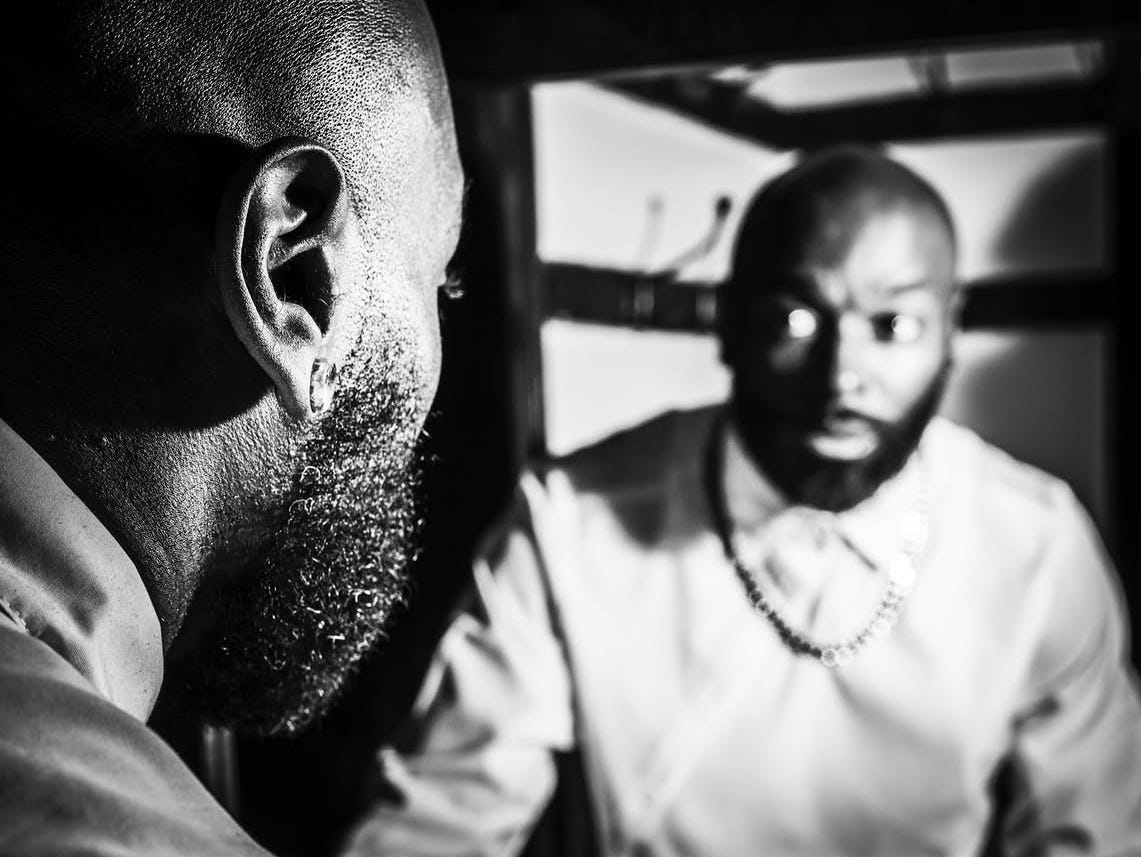
And not everything matters to everyone, which is how the machine survives. The scoring of Black America ran for a hundred years without mattering to the country, because the machine was pointed at us and the results were filed under somebody else’s problem. Selling the night sky doesn’t matter to the man who owns the mirrors. The inherited seat doesn’t matter to the people it will never be used against. Indifference is the operating fuel. The machine counts on you deciding that whatever it’s doing to the person ahead of you in line is not your concern, right up until the line moves and you’re the one at the window. It was always your concern. The mirror was on the wall the whole time. The only people who looked into it were the ones already inside it.
Everything matters. but Not everything matters to everyone.
Keep The Light Alive

If you have read this far, you already know what kind of work this is. It answers to the truth, not to power. It survives because people who understand its purpose decide it is worth keeping alive. Not through clicks. Through commitment.
A contribution is not charity. It is fuel. It covers the miles. It keeps the lights on when the work asks for more than sleep. It pays for the travel, the public records requests, the equipment that breaks at the worst possible moment, and the nights spent rewriting a sentence until it finally tells the truth without flinching.
It is a way of saying: keep going. We see what you are building.
☕ Buy Me a Coffee →
Even one cup keeps the archive lit.
Every act of support is another flash in the dark
Receipts
Eightfold AI Lawsuit:
Reflect Orbital (Selling Sunlight):
Lindsey Graham’s Sister Appointment (Inherited Seat):
Redlining Maps (1930s HOLC): Historical documentation widely available; key resources:
Library of Congress: https://www.loc.gov/ (search “Home Owners Loan Corporation maps”)
National Archives documentation on HOLC
Risk Scoring in Courtrooms:
ProPublica investigation on COMPAS algorithm (2016): https://www.propublica.org/article/machine-bias
Academic research on algorithmic bias in criminal justice sentencing