
Clean Shoes
On what the rag knows

Me Against The World Tupac Shakur 1995
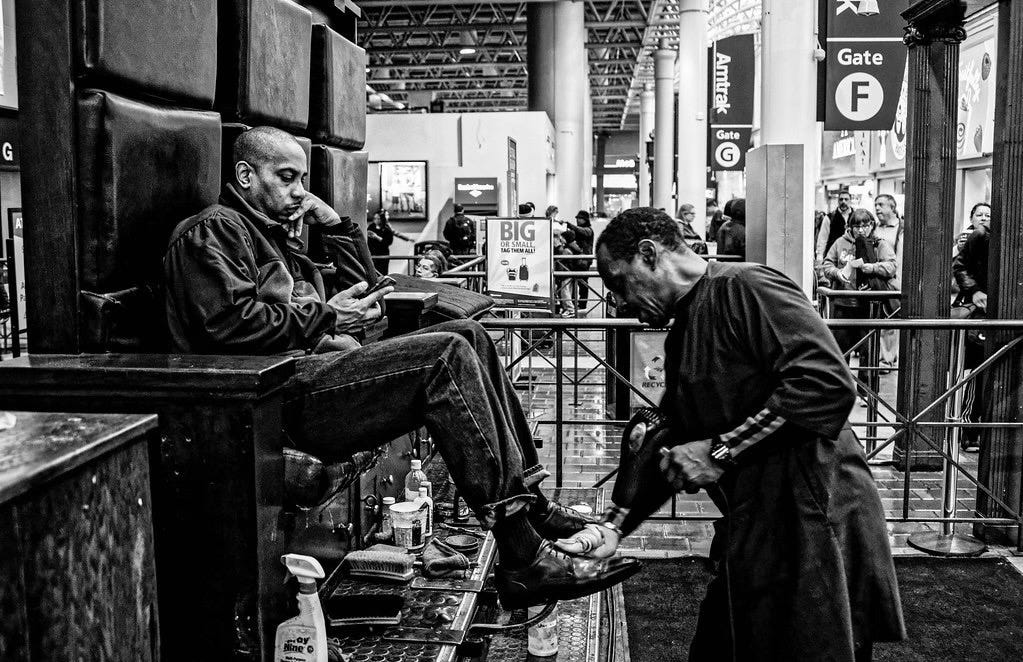
The station smells like floor wax and recycled air. Gate F. Gate G. The board overhead clicking through departures like it has somewhere to be. Sunday. I am heading back to Detroit and the book is in my bag and the ink from the inscription is not even a day old.
I see him before I understand why I stopped.
One man elevated. One man bent. The seated man’s neck at the angle of someone who has been looking at a phone long enough that his body forgot it made a choice. The man working over the shoe does not look up. Has no reason to. His rag moves in the same arc it has moved in a thousand times before that morning and will move in a thousand times after. The motion is not mechanical. It is mastered. There is a difference and the camera knows it before I do.
Gate F is open. Everyone is going somewhere. He is already there.
My shoes are clean.
I sit down anyway.
The night before, September 2016, Chi Modu held court at the book release in DC and I stood in that room the way I stand in rooms where something real happened. Not as a fan. As a photographer reading another photographer’s work.
200 pages. Over 100 images of a man he photographed three feet from fame, frame after frame, from 1994 until six months before Tupac was gone. I moved through those pages and felt what I always feel when a photograph is doing what a photograph is actually supposed to do. Not decoration. Not content. Not a post. A freeze of reality. A moment pulled out of time and held still so the rest of us can finally see what was actually there.
That is what photography is. That is what it has always been. And that is what today has done to it. Minimized it. Flattened it into content, into product, into the thing you make between the thing you were already going to do. Everybody has a camera now and the assumption became that everybody was doing the same thing. They are not. There is a difference between taking a picture and documenting a moment that deserves to survive. Chi knew that difference and lived inside it for thirty years.
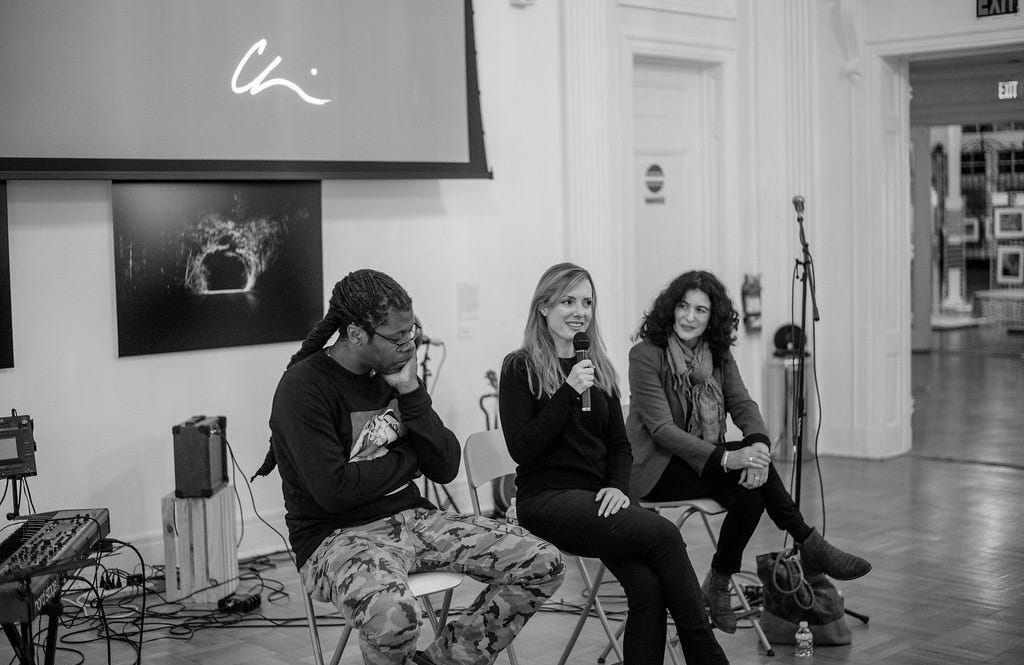
When I got to him I said it directly. You documented a legendary figure and your work now lives in eternity. People forget this. We freeze moments of reality in time. That is not a small thing. That is the whole thing. Tupac is gone. The world Chi stood three feet from, frame after frame, those quiet moments nobody else had access to, the profile shot while he tied his bandana, the cigarette in his mouth, the man behind the Thug Life image, that world only exists now because Chi pointed the camera at it before anyone understood what it would become.
I was driven by his energy. By being in the presence of someone who had actually been in those rooms with that man. Not the mythology. The person. Chi had earned that proximity the only way you earn it. He showed up. He built trust. He pointed the camera at the human being and not at the celebrity and Tupac let him because Tupac could tell the difference.
Chi heard what I said and looked at me for a moment the way you look at someone when they have said the right thing without knowing they were being tested.
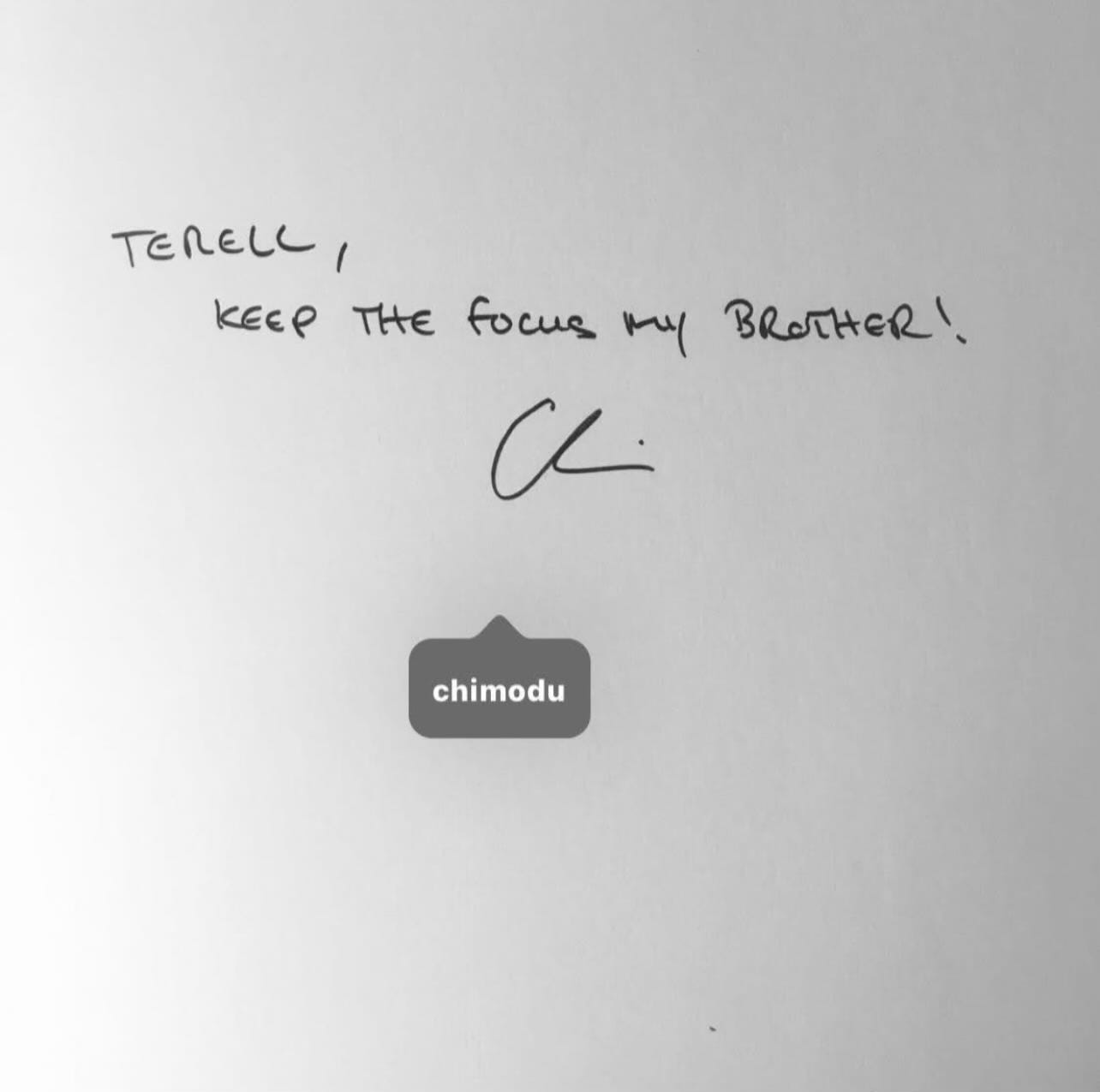
He opened the book and wrote: Terrell keep the focus.
Not a signature. Not a generic inscription. My name. A directive. The kind of thing you write to someone when you recognize something specific in them and decide to invest in it.
Filed it. Did not yet understand what I was filing.
The caption I wrote under the photo says: Go to the shoeshiner even when your shoes are already clean and shining. We must support people when they need us, not when we need them to get our job done.
Most people read the word go and move past it. That word is the whole essay.
It does not say feel differently. It does not say consider. It says go. The difference between sentiment and discipline lives in that word. Sentiment is what you feel when you see the shoeshiner and think about inequality or community or what it means that he is bent while the other man scrolls. Discipline is sitting down. Discipline is the three seconds between knowing your shoes are clean and sitting down anyway. The essay lives in those three seconds. Most of what matters in a life lives in that gap.
The seated man on his phone is not a villain. Noted that. He is a person who learned what people are for. Learned it early, probably, the way most people learn it. You show up when you need something. You leave when the transaction is done. The shoeshiner exists in his world as a function. A vendor. A service provider. The man’s programming is running correctly. He is not cruel. He has just never been given a reason to think about it.
That is how the system sustains itself without enforcement. Nobody has to be cruel. They just have to be consistent. The hand that only reaches when it needs something eventually forgets it has a hand.
In the neighborhood I grew up in, shoes were not accessories. Atkinson and 12th. Boston-Edison. The block where the rebellion broke open in 1967. In that world, shoes were the one thing you could choose when everything else was already chosen for you. Your address was chosen. Your school was chosen. The job your father worked was chosen by what the city had decided your father was for. But the shoes. You saved for those. You kept those clean. You wore those like a statement because they were a statement. We exist beyond utility. We exist in the realm of choice and beauty and care.
The shoeshiner understands this at a level the man on the phone does not. He is not shining leather. He is maintaining someone’s monument. He is the guardian of the one sovereignty that neighborhood gave you.
And he does this whether you see it that way or not. His dignity is not contingent on your understanding of what he is doing. He works. The arc of the rag is the same arc whether the customer knows what he is receiving or not. That is mastery. The kensai does not perform the cut differently based on whether there is an audience. The practice is the practice. The code runs whether or not it is witnessed.
That is the thing about Chi. He documented the community because the community deserved to be documented. Not because the industry was paying attention. Not because Rolling Stone had called. He was three feet from those men with his camera because someone had to be. The practice ran before the recognition came. The practice ran the same way after the recognition came. Same arc. Same code.
What Chi gave over the years after that book release was not complicated. It was consistent. Industry insight. How to stay true to the craft when the industry wants something else from you. How to hold your archive. How to understand that the work belongs to the community it came from, not to the institution that decides to pay attention to it when the moment is right for the institution.
He had lived through the other version. Watched what happens when a photographer builds an archive from the inside and the outside decides it belongs to them. Tupac’s estate. Legal filings. Licensing fees of three thousand dollars a year while his images ran on album covers and magazine spreads and documentary films and merchandise in six countries. The archive that was supposed to stay in the community kept leaving it.
He stayed true anyway. That was the instruction underneath all the other instructions. You document because it has to be documented. You show up because it has to be witnessed. Not for what it returns. Because it is the code and the code does not have conditions.
I was listening. I did not yet know what I was being prepared to carry.
World Press Photo Award. The Pulitzer equivalent in photojournalism. The only African or African American from Detroit to win it. A decade of work on Claressa Shields, the most decorated American boxer alive, who could not find a broadcast partner to televise a title fight. I walked into Kronk Gym in 2016 and met her and the story wasn’t being told and I kept the camera running and I kept the research going. One frame from that decade, the night at the Masonic Temple, the moment before she got back up.
The Guardian. The Smithsonian. The accolades arriving in sequence like that station board clicking through departures.
Somewhere in that same window, Chi is dying.
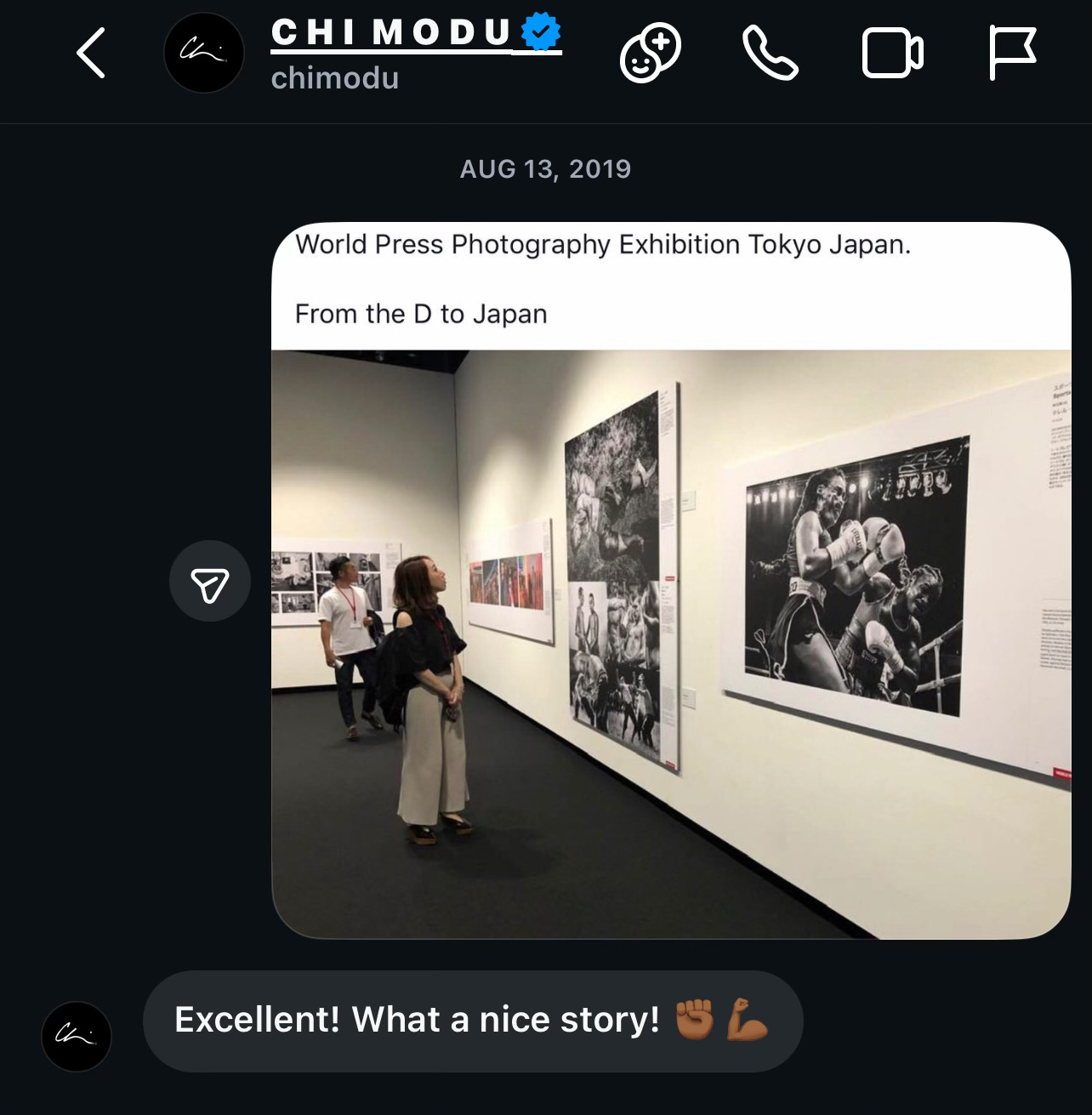
I do not know this. He did not know he had cancer at the time.
I am carrying the World Press Award through rooms I built from that address on Atkinson and 12th, and Chi Modu is carrying cancer, and the distance between those two facts is not geography. It is the specific weight of not knowing. The count running without the information it needs. I cannot see it from where I am standing.
He showed up for me before I had anything he could have wanted from the interaction. Wrote my name in the book. Answered the calls. Kept the mentorship going through the years when I was building toward something neither of us had named yet. He went to my shoeshiner when my shoes were not even dirty.
I find out 2020, maybe 2021. The mind tries to file it and finds no clean place for it. Runs the inventory backward from the inscription to the last conversation. Counts what was given. Counts what was not returned in time.
May 2021. Chi Modu dies in Summit, New Jersey. He is 54. His wife Sophia tells the New York Times it was cancer. The field processes the loss the way fields process losses. Obituaries. Tributes. The archive of the golden age of hip hop photography moves into whatever comes next without the man who built it from inside it.
Back to the station. The rag. The arc.
I raise the camera. The shutter fires. I do not caption it yet. I do not have the language yet for what I am filing. I just know that something in the geometry of this moment wants to be kept. One man who showed up to this station before dawn and will be here after I am gone. One man who practices his discipline whether the customer knows what he is receiving or not. The rag moving in the same arc it has always moved in.
Nobody sent me here. The transaction is not mine. My shoes are already clean and I sat down anyway because Chi taught me that the code does not have conditions. You show up. You point the camera. You document what deserves to be documented.
The man keeps working. Gate F closes. I get on the train back to Detroit with the book in my bag.
May 7, 2022. One year after Chi is gone. I post the photo.
Go to the shoeshiner even when your shoes are already clean and shining. We must support people when they need us, not when we need them to get our job done.
That must is not advice. It is not a reminder. It is grief that has found its form. The specific weight of what you owe someone who showed up for you before you knew you needed them, and the understanding that the debt cannot be paid in the direction it was owed.
Chi went to my shoeshiner. He wrote the directive in the book and answered the calls and kept the practice going beside mine for years while I was building. He showed up when there was nothing in it for him. When my shoes were not yet shining. When the rooms I would eventually earn the right to enter had not yet opened.
I was in my accolade window while he was in his last months and I did not know and I could not show up the way that weight deserved. Some things cannot be repaid in the direction they were owed. That is the specific sorrow underneath this caption. Not guilt. Not regret exactly. The understanding that loyalty is not a feeling. It is a practice. And the practice has to run before you know why it matters. Before the person you are practicing it for is no longer there to receive it.
You must go to the shoeshiner when your shoes are already clean. The must is load-bearing. Not should. Not when the mood is right. Must. The code running without conditions. The rag moving in the same arc.
The photo is three years old now. The man is probably still there. Different shoes. Same station. Gate F opening and closing on schedule. His arc unbroken.
Chi’s photographs are still in the archive. Still getting licensed. The community is still trying to keep what belongs to it. The New York Times ran the obituary. They always run the obituary. The work that survives is the work that someone decided had to be documented before anyone was paying attention.
Keep the focus.
The book is on the shelf with my name in it. The camera is still running. The code does not stop because the person who handed it to you is gone. That is the only kind of permanence available. You carry the practice forward. You show up before you are needed. You document what deserves to survive.
You go to the shoeshiner when your shoes are already clean.
Not everyone will stop. Not everyone will sit down. Not everyone will see what the man bent over that shoe is actually doing or understand what it costs a person to show up to the same station before dawn and do the same work with the same precision whether ten people walk past or a hundred. Not everyone will feel what I felt standing in that room with Chi, in the presence of someone who had frozen a legend in time and was still just a photographer trying to hold his archive together.
That is not an indictment. It is just true. And it is the reason the camera exists. The reason the writing exists. The reason you go anyway.
Everything matters. The moment. The inscription. The rag. The arc. The three seconds between knowing your shoes are clean and sitting down anyway. The calls you made and the ones Chi answered. All of it matters. Every frame is a freeze of reality that will outlast the moment it came from.
But not everything matters to everyone.
That is why you document it yourself. That is the whole job.
Keep The Light Alive
If you have read this far, you already know what kind of work this is. It answers to the truth, not to power. It survives because people who understand its purpose decide it is worth keeping alive. Not through clicks. Through commitment.
A contribution is not charity. It is fuel. It covers the miles. It keeps the lights on when the work asks for more than sleep. It pays for the travel, the public records requests, the equipment that breaks at the worst possible moment, and the nights spent rewriting a sentence until it finally tells the truth without flinching.
It is a way of saying: keep going. We see what you are building.
☕ Buy Me a Coffee →
Even one cup keeps the archive lit.
Every act of support is another flash in the dark