
THE RECORD AGAINST THE RECORD
On Memory, Erasure, and the Quiet Work of People Who Refuse to Forget

Arthur’s note
PART I: THE FRAME
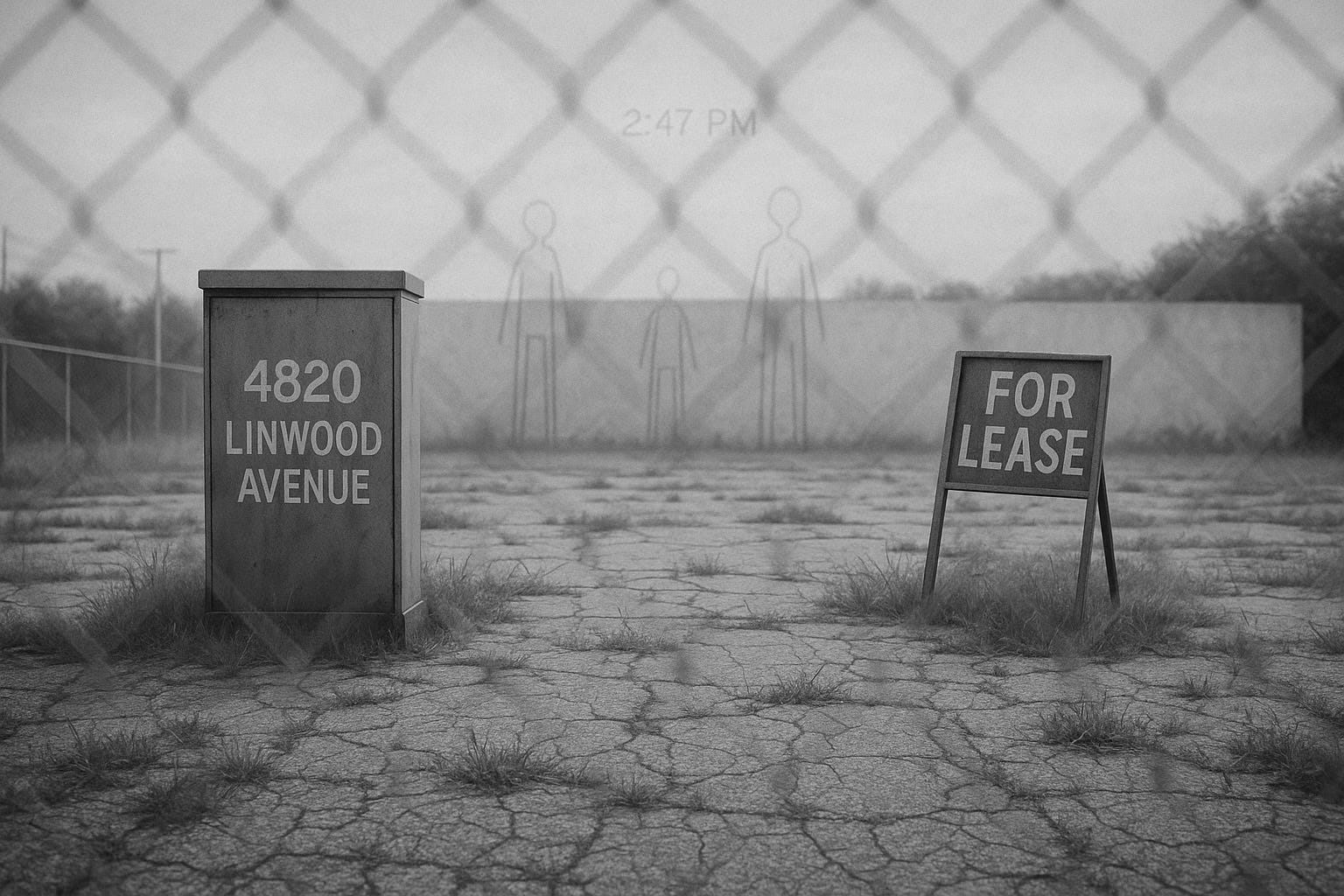
Someone stands in front of an empty lot on a Tuesday and tries to remember what they’re supposed to feel.
The building is gone. They know it’s gone. The chain-link fence tells them. The grass growing through concrete tells them. The For Lease sign facing the highway tells them. But their body is still expecting the building to be here. Their body is moving through the space where the walls used to be, registering absence as presence, and they can’t figure out if they’re angry or just tired.
The address is painted on a utility box. 4820 Linwood Avenue. When they search it on their phone, Google Maps still calls it Douglass Elementary School. The satellite image is from 2019. The building is visible in that image. Present. Solid. Real. But they’re standing where that building used to stand and it’s not here anymore, which means the map is lying, or their memory is lying, or the world is lying, and they can’t figure out which.
They search for more information.
The articles are quick. Local news, 2012. Declining enrollment. Budget cuts. Fiscally responsible decision. The superintendent called it progress. The language is soft. Consolidation. Better resources at the new facility. The narrative is organized like a conclusion: buildings close, children scatter, the system adapts. This is how progress happens. You don’t mourn. You move on.
They keep searching.
The older articles get harder to find. 1987 is where the archive stops going back. The yearbook from 1987 exists. References to Douglass Elementary appear in a few local history blogs. But there’s no middle. Thirty-five years from 1987 to 2012, and the school exists in that time. Three different people in Reddit threads mention going there. But the archive doesn’t hold it.
The building’s entire life is compressed into gaps.
This is what searching for a demolished building reveals. Not why the building closed. But why the building disappeared. Why standing in front of the empty lot feels different from standing in front of a building that no longer works. The building didn’t fade. It was erased. Actively. Systematically. Efficiently.
They photograph the fence.
They photograph the grass.
They photograph the utility box with the address painted on it.
They photograph the For Lease sign.
The timestamp reads 2:47 PM on a Tuesday in April. The geolocation is locked. They’re creating their own archive because the official one already moved on.
When they search for photographs of Douglass Elementary School, they get seventeen results.
Seventeen.
One is the school closure announcement from 2012. Two are from a Reddit thread called “Detroit Schools: RIP.” The others are Google Street View captures from different years. The building gradually disappearing from the image. Each version of the algorithm learning to not see it. Learning to skip past it. One photo is from a local history blog posted in 2015 with the title “Forgotten Schools of Detroit.” The caption reads: “This school was closed due to budget cuts. The building was demolished in 2013.”
Forgotten.
That’s what the system calls it when it’s done with you.
They’re looking at a photograph of the same building they’re standing in front of, and in the photograph it exists, and in reality it doesn’t, and the two timelines are colliding. The timeline where they’re standing at an empty lot. The timeline where they’re looking at a building that no longer exists. The timeline where they’re reading about something that’s already been archived as history.
The building no longer exists.
The people who went there are alive. The teachers are somewhere. The principal probably retired twenty years ago. The children who learned arithmetic inside those walls are in their forties now, maybe older. They carry Douglass Elementary inside them. They remember the light coming through the windows. They remember the lunch line. They remember a teacher’s name, or they don’t, but they remember the feeling of being a child in that building.
But the building doesn’t remember them.
Or the system decided to make it forget.
Not through force. Through efficiency. You demolish the structure. You don’t maintain the archive. You let the articles stop being indexed. You let Google Maps keep showing a building that no longer exists on satellite images from 2019. Anyone searching for the school in 2024 sees a building that’s already dead. You let the yearbooks go to estate sales. You let the photographs scatter across Reddit and random websites and the margins of other people’s projects.
The memory becomes optional.
This is what forgetting looks like when it’s built into the system. The building gets demolished and the algorithm learns to not see it. The articles stop being published and the search results show you absence instead of presence. Someone searches for their childhood and finds seventeen photographs scattered across the internet, losing resolution every year, every refresh, every time Google updates its index.
A neighbor remembers the school was beautiful. She remembers the auditorium. She remembers the principal’s name, but she can’t retrieve it. The memory is there but the retrieval is broken. The file corrupted. This is what happens when you stop maintaining the archive. The people who lived inside the building still carry the memory, but the infrastructure that holds it is gone. Eventually the memory becomes something they can’t quite access. Something they have to hunt for in boxes in basements. Something that’s losing resolution every year.
The system wants forgetting.
The system is efficient at forgetting.
When someone stands at the fence at 2:47 PM on a Tuesday in spring, they’re trying to understand what they’re supposed to do with this information. The building is gone and they’re supposed to remember it. The system demolished it and they’re supposed to hold onto the fact that it existed. The archive is erased and they’re supposed to preserve it.
This is what remembering means now.
Not fixing the system. Just refusing to let it erase.
They photograph the utility box. The address painted on it. The grass growing through the concrete. The For Lease sign that’s replacing the future the same way the demolition replaced the past. They’re creating a record because the official record already moved on. To the next building. The next phase of progress.
What remains when the building is gone but the ledger is still being written.
When the institution is demolished but the document exists, somewhere, explaining why. The closure memo. The budget justification. The superintendent’s statement about progress. Which one gets remembered: the building or the justification for destroying it.
The institution or the system that erased it.
The people who learned there or the efficiency that forgot them.
PART II: THE CURRICULUM
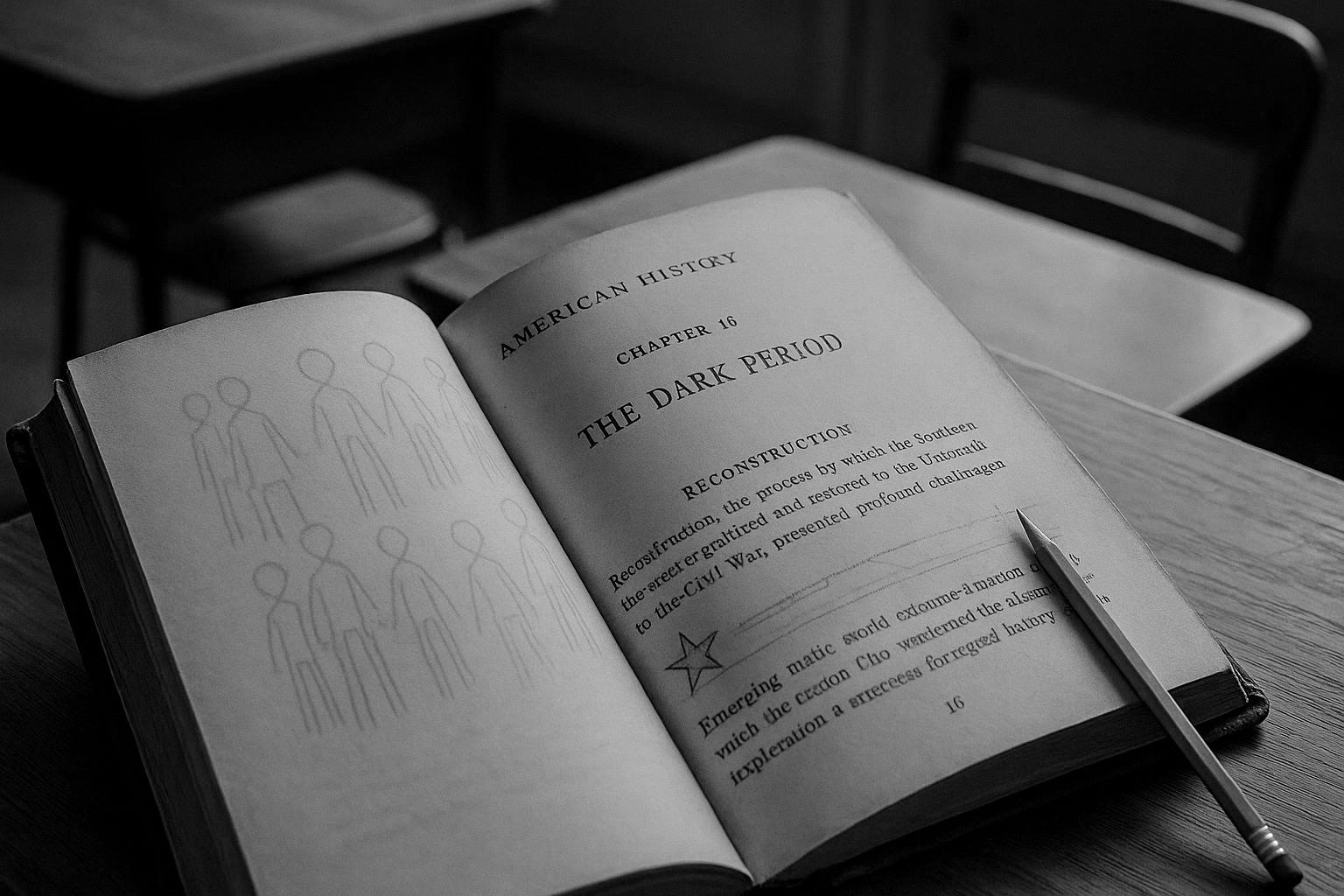
Third-period American History, 1997.
A student raises her hand about Reconstruction. The textbook has one paragraph. It’s called “The Dark Period.” Then the curriculum moves on to the Industrial Revolution. Thirty-seven years of Black political power, economic autonomy, and self-governance. Reduced to dark, erased by progress.
A Black political sunrise collapsed into a single paragraph. A national attempt at multiracial democracy collapsed into a footnote.
The textbook still exists. The binding is cracked. Someone’s name is written on the inside cover in blue pen: Marcus Washington, Room 206. The margins are full of a teenager’s thoughts. Underlines in pencil. A question mark next to the Reconstruction paragraph. A star drawn beside the Industrial Revolution section. This is how students signal dissonance: a star, a question mark, a pause.
Because the curriculum only asks one thing.
Move on.
The book was published in 1988. The author’s introduction promises to bring American history to life and help students understand the causes and consequences of major events. The first chapter covers Columbus. It covers Indigenous people. It uses the word discovered, which means the entire premise is built on a foundational lie.
But this isn’t about Columbus yet. It’s about what happens at Reconstruction.
You turn the page.
One page. Maybe 800 words. The heading: “The Dark Period: Reconstruction and Its Aftermath.” The first sentence explains that the South needed rebuilding. The North imposed military rule. The formerly enslaved were given the right to vote. These facts are presented flatly. Then the textbook frames the real issue: white Southerners resented these changes.
The problem, according to the textbook, is white resentment not white violence, not white backlash, not white terror.
The Ku Klux Klan appears as a group that “resisted” Reconstruction. Not murdered. Not lynched. Not overthrew. Just: resisted.
No Black political leader is named.
There is no Hiram Revels. No Blanche Bruce. No Robert Smalls, who commandeered a Confederate ship and later served five terms in Congress. No Mary Ann Shadd Cary, who edited a newspaper and pushed for universal suffrage. None of them exist in the text. Their achievements were not erased.
They were never entered.
The paragraph concludes by saying Reconstruction failed when federal troops withdrew. The Dark Period ends. The next chapter begins: industrial expansion, steel mills, railroads, invention.
Progress.
The textbook does not explain what followed the withdrawal of troops. It does not mention the violent reclamation of power. It does not explain how Black wealth was extracted, how voting rights vanished, how convict leasing replaced slavery with new paperwork. It does not explain that the period was “dark” because white violence made it dark and that the end of Reconstruction was not healing but normalization.
Instead, the curriculum advances.
A paragraph. A pivot. A century of consequences omitted.
This is how curriculum works as an operating system. Not through lies but through selections. Not through conspiracy but through architecture. What gets included becomes truth. What gets excluded becomes impossible.
Blanche Bruce is not there because the curriculum has no place for his existence. The narrative arc demands progress. It demands a return to white-centered history. It demands that Black autonomy appear anomalous.
The Dark Period needs to be dark so that what follows can be bright.
Black political power must be forgotten so that white redemption can remain the dominant storyline. Names must disappear so the system is never forced to account for what was destroyed.
Decades later, reading the book, you can feel the intentionality. Not malicious, but structural. Not personal, but systemic.
Every omission is a decision.
A student in 1997 reads this book.
Marcus Washington, Room 206, underlines the Reconstruction paragraph. He marks the next section with a star. Then he does what the curriculum requires.
He moves on.
He takes the test. He scores whatever the textbook enables him to score. He learns what the curriculum requires him to learn: that thirty-seven years of Black political life are worth less than a chapter on the steam engine. That real history is what comes later.
The curriculum teaches forgetting through form.
But there is a star in the margin.
A star is small. A star is quiet. A star is a refusal.
Something entered the student that the curriculum could not contain. He sensed the absence. He could not articulate it. But he marked it. He created his own archive in the margins of someone else’s history.
The system offered one paragraph and called it a chapter.
He created his own ledger.
Otherwise the forgetting would have been total.
The problem isn’t the textbook. Textbooks are written by committees. The problem is the system that allows those committees to decide thirty-seven years of Black power equals one paragraph. That allows “Dark Period” to be the official name for a Black political dawn. That allows a student to finish a year of American history never knowing that Black people once held office in the South held the future in their hands before white violence took it back and called the taking “redemption.”
The textbook moves on.
The student draws a star.
Two archives now: the official one, and the one in the margin.
The question, forty years later, is which one survived in him. What does he teach his children? What version of the past does he pass on? Does he repeat the textbook’s language? Or does he recall the suspicion he could not yet name?
The curriculum doesn’t just teach history.
It teaches the perimeter of memory.
And remembering differently requires resistance. It requires finding the names that were buried. It requires standing in the margin and refusing the central narrative.
One paragraph was not an accident.
It was a choice.
A deliberate decision to make certain people disappear.
Hiram Revels. Blanche Bruce. Robert Smalls. Mary Ann Shadd Cary.
Their names are an act of resistance now.
Not simply because they matter, though they do but because speaking them refuses the architecture. It forces the archive to widen. It demands space for what the curriculum tried to compress.
The star in the margin is still there.
The forgetting was never complete.
PART III: THE MEDIA CYCLE
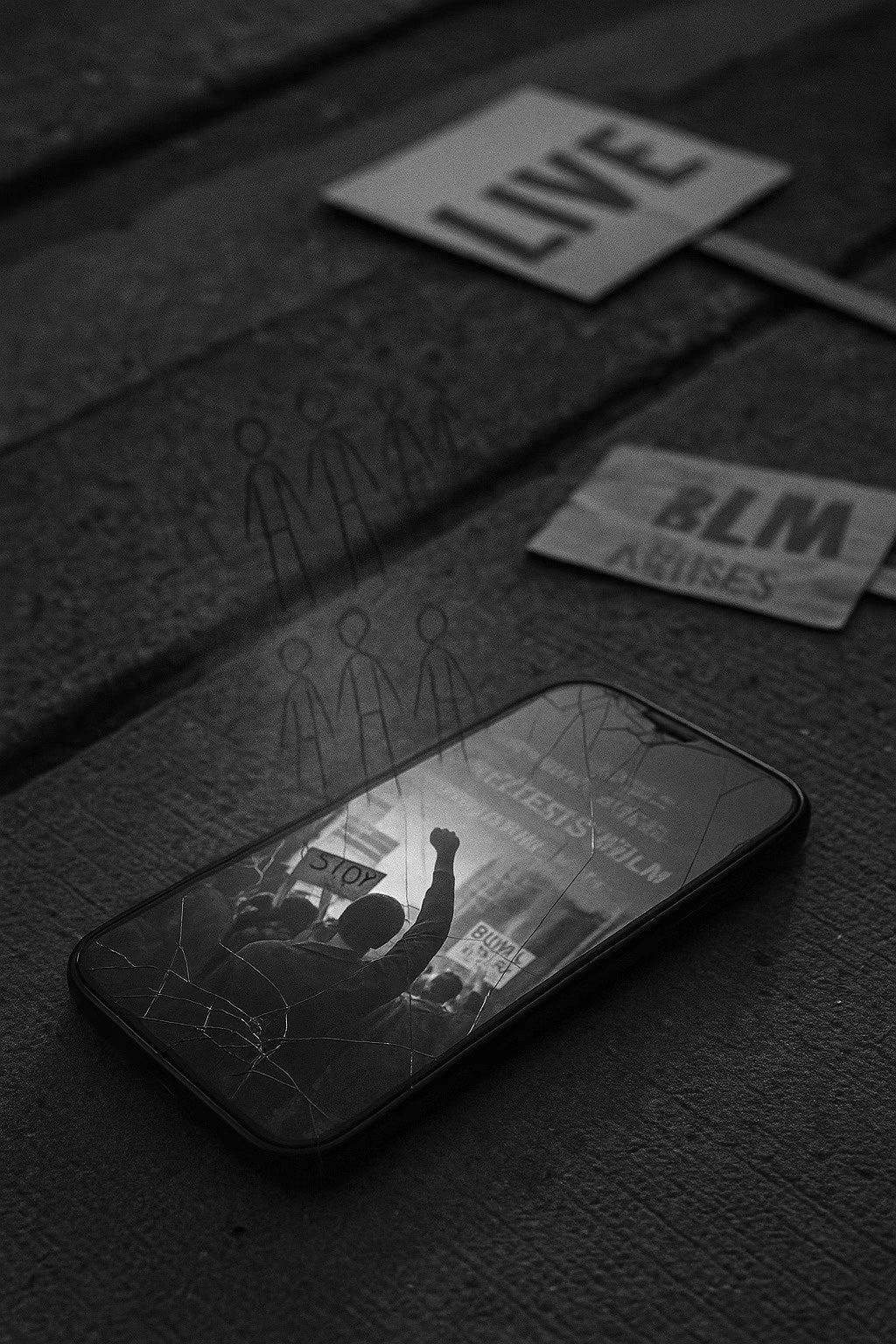
Monday morning a video surfaces.
It goes viral by afternoon. News stations run it on loop. Comment sections fill with a hundred thousand voices insisting something has to change. Hashtags spike. Think pieces appear. Everyone says they saw it. Everyone says they can’t believe it. Everyone performs the shock that is supposed to precede transformation.
Tuesday, the video is still trending.
The algorithm has learned to show it. Every feed carries it. The moment becomes the moment. Awareness becomes the story. Coverage multiplies into coverage of coverage. A crisis becomes an event, then becomes a phenomenon. Someone repeats it again: this has to change.
Wednesday, the reach drops.
Not because interest vanishes, but because the algorithm calculates diminishing returns. The moment moves down the feed. It is pushed aside by newer moments, sharper ones. The original video still exists, but algorithmically it has already been buried. Finding it now requires intention.
By Thursday it has been supplanted.
A different crisis. A different video. A different performance of urgency. Comments migrate. Think pieces pivot. News outlets shift attention. Friday afternoon, someone asks on social media, whatever happened to that first video? The question already carries nostalgia. As if the moment were years ago. As if last week’s outrage belongs to another era.
By Sunday the first video is archived.
Not deleted archived. Still present, still available, but detached from the feed. The algorithm has learned not to show it. The velocity lasted four days. Then the replacement arrived. Someone wonders whether the moment was exaggerated, or imagined, or whether they misunderstood its importance. Searching for the video takes effort now. The ease is gone.
This is how the media cycle works. Not by suppressing, but by replacing.
The system doesn’t censor. It accelerates. The outrage is real, but the infrastructure is engineered for velocity, and velocity is impossible without constant substitution. The moment becomes a resource. It is extracted, consumed, and discarded when the well runs dry.
The mechanism functions precisely because it has no conductor.
No one decides to bury the video. The algorithm merely adapts. No producer issues an order. The system simply optimizes. No conspiracy is required. Only efficiency. The video served its purpose. It generated engagement. And when the engagement waned, the system moved on.
This is how forgetting becomes industrial.
Watch what happens to the people in the video.
On Monday, they are visible. Faces repeated across platforms. Their pain named. Their experience centered. Their story seems undeniable.
By Tuesday, the shift begins.
The moment becomes less about what happened and more about the reaction to what happened. The metrics supersede the subjects. The people fade into the scaffolding of discourse. They become symbols instead of individuals.
By Wednesday, they are nearly invisible.
Not because the event changed, but because the conversation moved past them. A debate erupts about whether the video reflects a systemic issue or an isolated incident. The people inside it become evidence rather than subjects.
By Thursday, they become references.
Names placed beside earlier names. Their pain enlisted to demonstrate a larger pattern. Useful, but generic. Their specificity dissolves.
By Friday, they are debated.
Not for their humanity, but for how their story is being used. Someone accuses them of politicization. Someone else accuses the audience of weaponization. The focus has shifted entirely away from what happened to them.
By Sunday, they are forgotten.
The injustice continues unchanged. Their lives remain impacted. But the algorithm has moved on. The news has moved on. The cycle requires fresh injury to sustain itself. Their suffering becomes “older content.” Less valuable.
The people harmed cannot move on with the cycle.
They remain inside the aftermath while the world accelerates past them.
They navigate recovery long after the cameras disappear. Legal processes that last years. Trauma that lingers indefinitely. But the cycle has no patience for aftermath. Aftermath has no engagement value.
Every cycle insists that this video will be the one that creates change. But the infrastructure is not designed for change. It is designed for circulation. For extraction. For replacement.
The cycle does not need to lie.
It only needs to move faster than accountability can travel.
It only needs to outpace the public’s attention span.
It only needs to ensure that outrage evaporates before consequences arrive.
The video is still there. The injustice is still there. The people are still there. Only the attention has vanished.
This is how spectacle erases accountability.
Not by hiding what happened but by overwhelming it with what happens next.
PART IV: THE POLITICAL REWRITE
The crime stays the same.
The name changes.
Slavery becomes migration. A system of forced labor and theft becomes a description of movement. Migration suggests choice. Suggests journey. Suggests something that happened rather than something inflicted. The enslaved arrive at the port, but the word used to describe their arrival omits the people who brought them there. Who bought them. Who owned them. Who extracted their labor until their bodies gave out.
The archive preserves the fact.
The language erases the agent.
This is what rebranding does. It does not alter the event. It alters responsibility. Slavery → migration removes the slaveholder. Lynching → mob violence removes intention. The mob becomes the actor instead of the white men who created it. The violence becomes the event rather than the assassination. The killing remains. The killer disappears.
Somewhere inside a government office, someone chooses the word that will enter the record.
Once chosen, it spreads. Agencies adopt it. Reports cite it. Soon the official version becomes the dominant version. The older word still exists in the archive, but the authorized word circulates outward through policy, education, journalism. Newspapers use the term because government used the term, and public debate uses the term because the newspapers did.
The crime continues.
The naming does not.
COINTELPRO becomes intelligence operations.
The systematic destruction of Black political movements becomes a technical procedure. Operation suggests planning. It suggests logistics. It removes malice. It removes targeting. It removes the part where government agencies intentionally fractured Black communities. An operation could be anything necessary, unfortunate, professional. The original term, counterintelligence program, names the intent. The rebranded term names the bureaucracy.
The people destroyed by counterintelligence still exist.
They are still imprisoned. Still exiled. Still dead. Still carrying trauma. But the official record now describes what was done to them in a vocabulary designed to distribute culpability across the institution instead of concentrating it on the act.
Police murder becomes officer-involved shooting.
The officer was involved. That much is true. But involved implies participation rather than action. A shared event rather than a chosen act. Two parties caught inside the same outcome. The person killed becomes equally “involved,” as if the imbalance of power were irrelevant, as if the officer did not choose to pull the trigger. The death remains. The killer dissolves into wording.
The family must live with the reality.
The country gets to live with the euphemism.
Systemic racism becomes disparities.
Systemic names design. It names the architecture. It places responsibility on the system itself. But the word also threatens the institutions that built that system. So it is replaced. Disparity suggests unfortunate imbalance. A difference in outcomes, not in design. Something that emerged rather than something engineered.
The disparity is real.
The cause becomes rhetorical fog.
This is what political language does.
It preserves the fact while erasing the intent.
The event is unchanged. The description is altered. The harm remains visible. The agent becomes untraceable. To understand the actual history, you must dig beyond the official layer. You must unearth the older vocabulary. You must know that the words used now are not the words used when the act occurred.
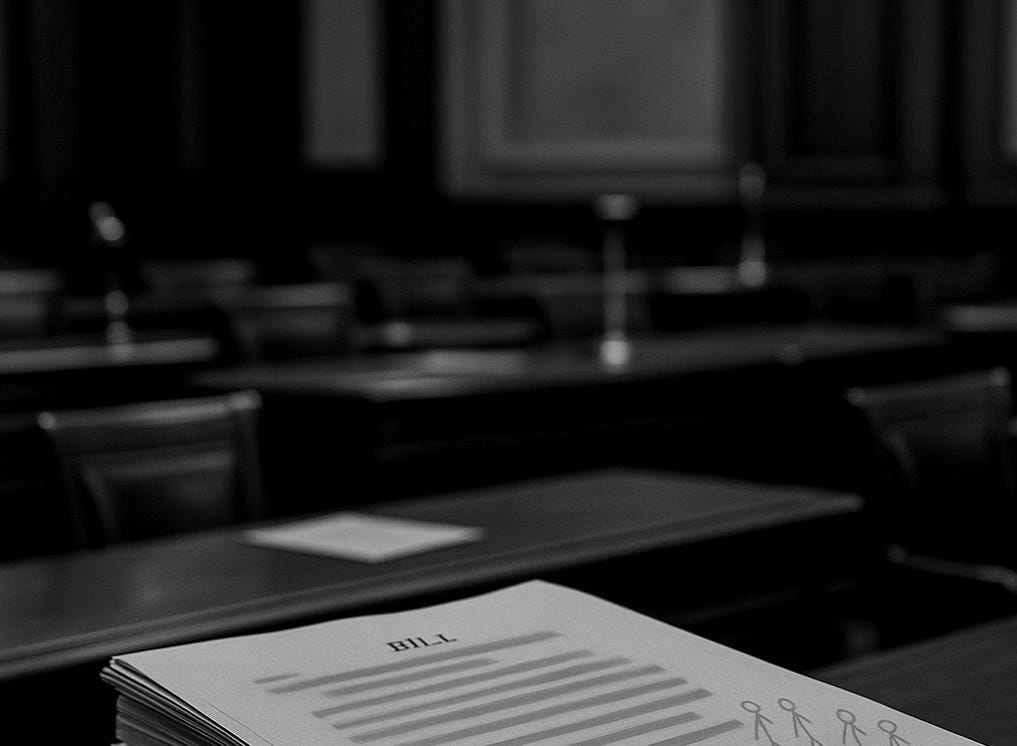
A legislator writes a bill.
The bill harms Black communities specifically. The legislator knows this. The staffers know this. The committees know this. But the bill is written in neutral language. Technical. Vague. A policy architecture that hides its target. The harm is delivered through clauses, exceptions, definitions written narrowly enough to capture who is meant to be captured.
The effect arrives.
But the official record describes neutrality. If disproportionate harm appears, it is framed as “unfortunate.” “Regrettable.” “Unintended.” The legislator is protected by the language that legislator designed.
The people harmed are not.
They live inside the consequences of a policy that was crafted for them but named for no one. A system that was designed to injure them but recorded as something else. The outcome is visible. The intention is obscured. The bill exists in an archive where no explicit mention of race appears, though race structured every line.
The damage is material.
The culpability is linguistic.
This is how America rewrites its crimes while keeping them intact.
Not by hiding what happened.
By altering the vocabulary that describes what happened.
Replacing moral language with technical language.
Removing agency from sentences.
Turning deliberate harm into passive outcome.
The archive still holds the original words somewhere: in old newspaper clippings, in court transcripts, in the memories of people who survived what the rebranding attempts to soften. But the official record moves forward using the sanitized terms. And a generation grows up learning that the crime was something else something smaller, something natural, something unfortunate.
The people harmed never experience the softened version.
Their bodies remember the original term.
Their lives reflect the original intention.
Their trauma exists regardless of vocabulary.
They carry the truth into a world that has decided to rename it.
This is the political rewrite:
Keeping the crime.
Killing the language that could condemn it.
PART V: THE SUPPRESION
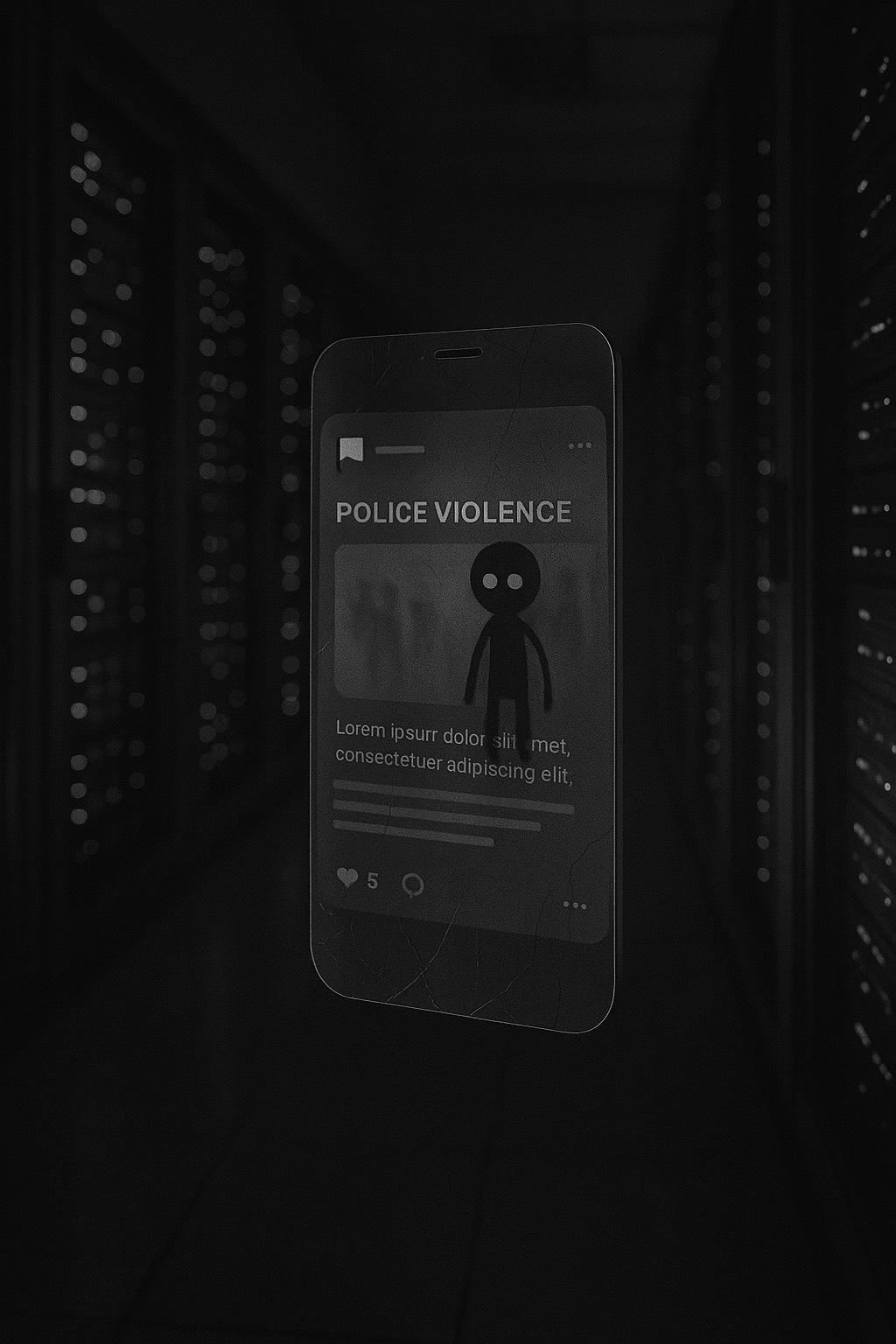
A post documenting police violence surfaces.
It appears at 8 PM on a Tuesday. The algorithm reads it instantly. It scans the image, classifies the content, and flags it as graphic. The post is not deleted. It remains technically visible. But the flag alters the trajectory. It is no longer recommended. Its reach collapses. The notification stops appearing in feeds. Someone following the poster might still see it. Someone searching directly might find it. But for the majority who would have seen it, it is gone.
This is not censorship in the traditional sense.
The post exists. The evidence remains. The documentation is there. But the visibility has been surgically extracted. The content is both preserved and functionally erased. Automated systems excel at this. They maintain the appearance of freedom while controlling what is visible.
A hashtag recording state violence begins trending late Thursday night.
It moves quickly posts, shares, engagement. The algorithm monitors. It calculates. At 11 PM, it applies what the platform calls shadowbanning. The hashtag still works. It can still be searched. But it is no longer recommended. No longer placed in front of those who have not already interacted with it. The trend begins to flatten. By Friday morning, the hashtag has fallen so far down the rankings that no one new encounters it. Momentum that was building in real time collapses under a calculation no human made, and no human can fully explain.
This is how the algorithm erases in real time.
Not by deletion. By invisibility. The evidence remains. The documentation persists. But the reach is destroyed. The velocity dies. The moment that could have spread widely is contained to those already paying attention. The algorithm has learned to suppress without suppressing. To silence without removing. To make something disappear while insisting it is still present.
A video archive documenting institutional racism is uploaded.
The channel is monetized. It has followers. The research is rigorous. The production is professional. Everything signals that the algorithm should elevate it. But the system flags it as misinformation not because it is false, but because the algorithm has learned that content about racism is “risky.” Content documenting institutional harm toward Black people is flagged more frequently than nearly any other topic.
The archive is demonetized. The creator loses revenue. The recommendations vanish. The video drops from search suggestions. It remains technically available but practically hidden. The creator can appeal, but the appeal reaches an automated system. The decision stands. The archive remains shadowbanned.
The mechanism requires no intention.
No employee at the platform chose to suppress content about racism. The algorithm was trained on data. It learned patterns. It enforced those patterns. The outcome is suppression. But there is no person to blame. No policy directive. No memo titled Don’t Show Black Pain. There is only a system reflecting the biases embedded in the world that built it.
This is the terror of automated erasure.
It does not require malice. It requires indifference.
The platform does not care. The algorithm does not have politics. It evaluates risk. It evaluates friction. It evaluates complaint rates. It does not evaluate truth.
A person posts testimony about their encounter with police.
No graphic imagery. No incendiary framing. Just an account. The algorithm recommends it normally. Engagement grows. The post begins to move. Then it hits a threshold. The system identifies the account as one that frequently posts about police violence. Activist accounts generate complaints. Complaints require moderation. Moderation is expensive. The algorithm reduces the visibility of the account preemptively.
The person notices only that the reach has collapsed. They are not told why.
They are not shown the shadowban. They are not shown the calculation. Their voice is not removed only minimized. The algorithm considers their existence a cost.
A researcher uploads a dataset documenting hiring discrimination.
Peer-reviewed. Methodologically sound. Rigorously presented. The algorithm adds a disclaimer: third-party data; not verified by the platform. The disclaimer is technically true. But it adds friction. It introduces doubt. It signals to the public that the data is less trustworthy than other topics the platform leaves untouched.
The friction is not evenly distributed.
Research about racism is flagged disproportionately.
Research about state violence is flagged disproportionately.
Content that challenges institutions receives more warnings than content that reinforces them.
This is how the algorithm polices testimony.
Through friction. Through ranking. Through visibility reduction. Through categorization as “risky.” Through language that implies inaccuracy without proving it. The truth becomes harder to locate, not because it is hidden, but because it is deprioritized.
A community creates an encrypted archive.
They know the algorithm will suppress them. They move to spaces the platform cannot read. Cannot categorize. Cannot learn from. The archive becomes closed-circuit knowledge. Preserved. But inaccessible to anyone outside the network. The algorithm has pushed documentation underground not by banning it, but by punishing visibility so consistently that the community retreats into secrecy.
This is the final form of algorithmic erasure.
Not the suppression of what is posted.
The suppression of what would have been posted.
The preemptive silence before documentation exists.
No single decision-maker is responsible. The platform does not intend this outcome. The engineers did not design it explicitly. But the system they built learned to identify and suppress destabilizing truths. It reduces lawsuits. Reduces complaints. Reduces controversy. The system is rewarded each time it avoids institutional criticism.
The archive still exists.
The testimony is still recorded.
The documentation is still intact.
But the visibility is gone.
The algorithm has answered the question every oppressive system faces:
How do you acknowledge that something happened without allowing that acknowledgment to reach enough people to demand accountability?
The answer is automation.
Algorithms that suppress without removing.
That erase without deleting.
That bury without hiding.
A system trained on a society built on erasure learns to erase at scale.
This is how America forgets now.
Not through government censorship.
Not through editorial suppression.
But through automated learning systems optimizing for stability, safety, and profit. Systems that learn which truths destabilize, and quietly reduce their visibility until those truths become optional.
The people documenting harm are still documenting.
Still testifying.
Still archiving.
But they are doing so in a world where the algorithm has learned to erase them more efficiently than any institution before it faster, quieter, and without leaving fingerprints.
And the people being erased feel it happening.
They just can’t prove it.
PART VI: THE COST
Someone lives inside the contradiction every day.
They witness what the system is trying to erase. They document it. They refuse to let it disappear. And the cost of that refusal settles into the body like stones in deep water.
The exhaustion is not the work itself. The work is what keeps them alive. The exhaustion is the weight of knowing that the work might not matter. That the system is designed to outlast any single person’s resistance. That no matter how much they document, the forgetting will continue. The erasure will continue. The replacement will continue.
The machine does not stop because you refuse it.
It simply routes around you.
This is the first cost: the understanding that resistance might be futile.
Someone posts testimony about what happened to them. The post is shadowbanned. They watch the reach collapse. They know the algorithm has decided their story is not profitable to amplify. The knowledge arrives not as outrage but as hollow recognition. They expected this. They have learned to expect this. But expecting something and living it are different costs.
The hollow feeling is the cost of clarity.
When you understand the system, you lose the comfort of ignorance. You see the mechanism everywhere. Every headline is a choice about what to show. Every silence is a decision about what to hide. Every platform is a system designed to extract and erase. Once you see it, you cannot unsee it. The world becomes transparent in a way that is not liberating. It is exhausting.
Someone spends years documenting what the official record refuses to acknowledge. They travel. They interview. They preserve. They build an archive no one asked for. The work is sacred. It is also invisible. No institution supports it. No platform promotes it. No algorithm recommends it. They do it anyway. But the doing it anyway, year after year, against the gravity of indifference, costs something that does not show.
The cost is the slow erosion of hope.
Not the extinguishing of it just the erosion. The way water wears stone. You keep working knowing that the work might not matter. Knowing that the system might absorb it and convert it to data. Knowing that even if the work survives, it might not change anything. You do it anyway. But the cost is paid in the wearing away of belief that the work will be enough.
Someone refuses to optimize their voice for the algorithm. They write long sentences. They ask the reader to climb. They refuse compression. And the numbers respond by staying small. The reach stays limited. The engagement stays low. They know this. They choose it anyway. But the choosing it anyway, every single day, against the system’s incentives, costs the stability of feeling useful.
The cost is the constant question: Am I wasting my time?
The system teaches that if something is not profitable, visible, or measurable, it is not valuable. To refuse that logic requires refusing the culture’s basic operating principle. It requires living as if something could matter even if no one sees it. It requires faith in a world that no longer has institutions that know how to hold that faith.
That is an exhausting way to live.
Someone documents police violence. They are careful. Precise. They follow protocol. They provide context. They avoid spectacle. And still they are accused of weaponizing suffering, of politicizing tragedy, of exploiting pain. The accusations come from people who benefit from erasure. But the accusation still lands. It still costs something to be called a liar when you are telling the truth. To have your motives questioned when you are risking everything to be clear.
The cost is the isolation of insisting on what is real.
Someone tries to teach their children the truth not the official version, but the real version. But the children are also being trained by the system. They are learning that what trends is true and what does not trend might as well not exist. Teaching against the current of the algorithm costs the parent in ways that accumulate.
The cost is the grief of watching the people you love be colonized by the system you resist.
Someone carries history in their body. The trauma. The memory. They live in a system designed to make them forget. Every mechanism pushes toward forgetting. They refuse. They carry it anyway. They pass it on. And the cost is that they must carry it alone. The system won’t help. The culture won’t validate. They must hold the weight while the world moves on.
The cost is the physical toll of carrying what the system urges you to release.
Someone speaks truth in spaces designed to suppress it. They name the system. They offer evidence. Sometimes they are heard. Sometimes they are not. And the cost of speaking truth that fails to land is different from the cost of silence. It is the cost of learning that clarity is not enough. That evidence is not enough. That being right is not enough.
The cost is understanding that resistance does not guarantee change.
Someone refuses to let a moment be replaced. They insist on continuity. They keep the story alive past the expiration date of the feed. They become the one who remembers. The cost is that they become a problem to people who want to move on, to a culture built on replacement.
The cost is being labeled difficult for refusing to forget.
Someone documents the erasure. Builds a record. Preserves what should be preserved. Work no one pays for. Work that might never be seen. Work that might not matter. They do it because documenting is its own form of prayer.
Prayer is invisible labor in a culture that worships visibility.
The cost is the constant threat of invisibility.
Someone loves inside this system. The relationship exists between what can be said publicly and what must be protected. The balance is exhausting. The secrecy necessary. The love real but constrained. The cost lives in the spaces between honesty and safe performance.
The cost is the erosion of intimacy under systems of surveillance.
Someone tries to create. To make art. To express something true. But creation takes place inside a world designed to convert everything into content. They create anyway. But even private creation is colonized by the expectation of eventual public consumption. The cost is the loss of the unwitnessed gesture.
The cost is the disappearance of art made for its own sake.
Someone lives with the knowledge of what is being done to their people. What is being stolen. What is being rebranded. The system will continue. The erasure will continue. Resistance might slow it but cannot stop it. They live with this knowledge.
The cost is despair not dramatic, but quiet. Heavy. Bodied.
But they do not stop.
This is the real cost. Not defeat. Endurance. They keep documenting. Keep witnessing. Keep resisting. Knowing it costs everything and might change nothing. Knowing the work might not matter. Doing it because it is the only way to stay human.
The system wants them to believe resistance is futile. That forgetting is automatic. That erasure is natural. That they should give up.
They don’t.
And the cost of not giving up, of staying human in a system designed to numb you, of witnessing when witnessing is invisible, of creating when creation is content that cost is paid daily.
It is immeasurable. Unmonetized. Unseen.
But it is paid.
And yet.
Someone still documents.
Someone still refuses.
Someone still witnesses.
Someone still loves.
Someone still creates.
Someone still resists.
Not because they believe it will work.
Because the alternative is annihilation.
The cost is everything.
And it is worth it.
Because staying human is worth any price. Because forgetting is not automatic. Because erasure requires cooperation.
Because some people refuse to cooperate.
The cost is what they pay for that refusal.
And that refusal quiet, steady, unprofitable Is the last thing the system cannot absorb.
It is the ledger itself.
Keep The Light Alive

If you have read this far, you already know what kind of work this is. It answers to the truth, not to power. It survives because people who understand its purpose decide it is worth keeping alive. Not through clicks. Through commitment.
A contribution is not charity. It is fuel. It covers the miles. It keeps the lights on when the work asks for more than sleep. It pays for the travel, the public records requests, the equipment that breaks at the worst possible moment, and the nights spent rewriting a sentence until it finally tells the truth without flinching.
It is a way of saying: keep going. We see what you are building.
☕ Buy Me a Coffee →
Even one cup keeps the archive lit.
Every act of support is another flash in the dark
Receipts
1. Cheikh Anta Diop — The African Origin of Civilization: Myth or Reality(1974)
https://www.lawrencehillbooks.com/titles/the-african-origin-of-civilization/
2. James Baldwin — The Fire Next Time (1963)
https://www.penguinrandomhouse.com/books/7344/the-fire-next-time-by-james-baldwin/
Collected Essays (Library of America)
https://loa.org/books/14-james-baldwin-collected-essays/
3. Arline Geronimus — “Weathering” Research
Demography (2016)
https://link.springer.com/article/10.1007/s13524-016-0491-3
(Subscription-based, but stable academic link)
4. Kara Keeling — The Witch’s Flight: The Cinematic, the Black Femme, and the Speed of Resistance (2021)
https://global.oup.com/academic/product/the-witchs-flight-9781478013999
5. Saidiya Hartman
Wayward Lives, Beautiful Experiments (closest to “Waywardness”)
https://wwnorton.com/books/9780393357622
Scenes of Subjection (1997)
https://global.oup.com/academic/product/scenes-of-subjection-9780195089764